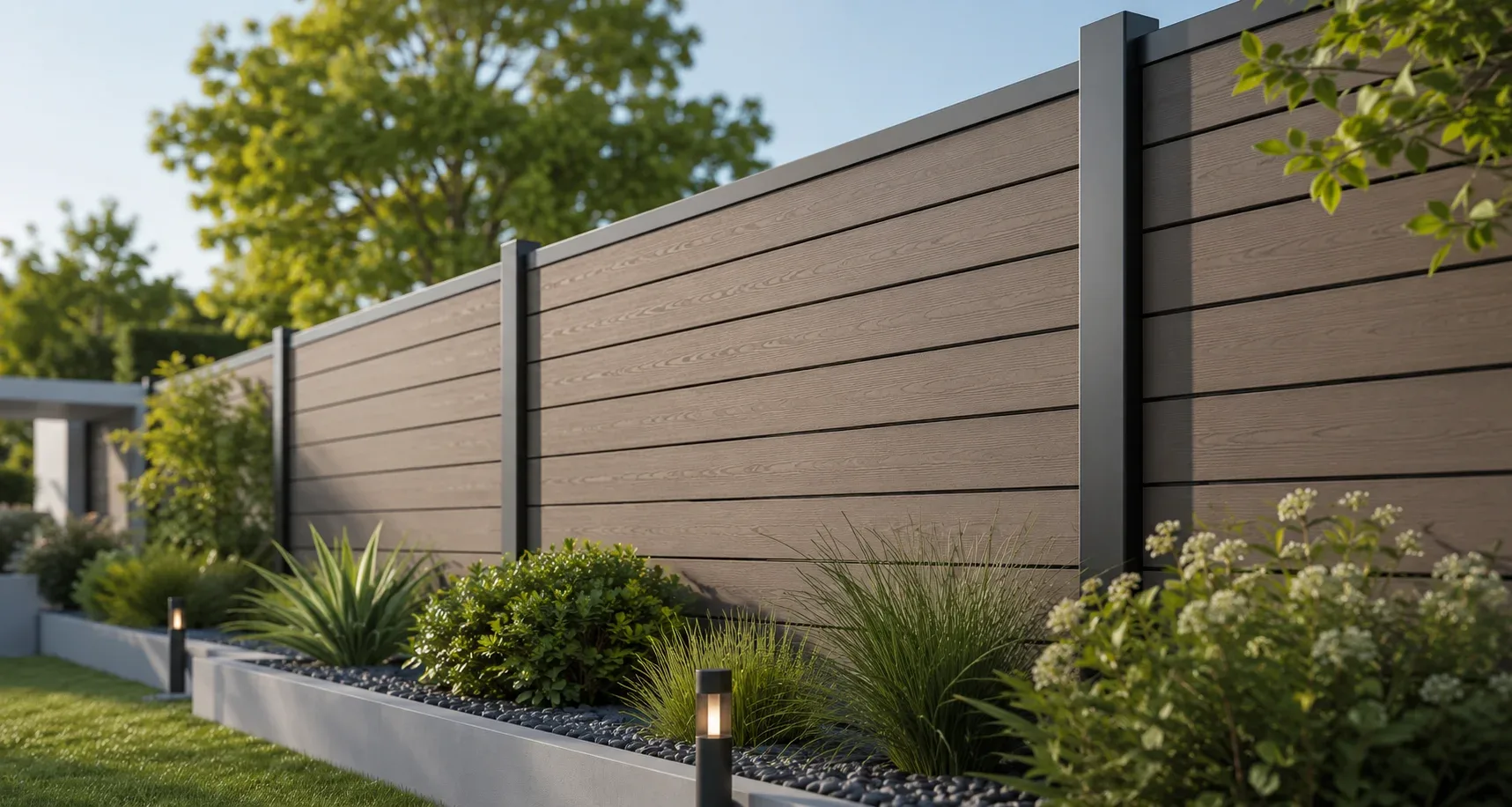
Educational Introduction
For landscapers, material dealers, and specialized distributors, composite fencing has emerged as a prudent and controlled solution. It combines aesthetic appeal, durability, and minimal maintenance, with systems now designed for professional installation. This article provides an operational guide to selecting, selling, and installing durable composite fencing while minimizing after-sales service, helping prescribers to provide accurate advice.
Why Composite Fencing is Gaining Popularity Among Professionals
Demand is increasing because fencing is no longer just a boundary: it contributes to the architecture of the garden and provides privacy. Homeowners seek a stable appearance, free from annual cycles of staining or painting. For landscaping companies, composite solutions meet these expectations while offering rational installation and reproducible finishes from one project to another.
From a prescriptive standpoint, local urban plans (PLU) and homeowners' association regulations can govern heights and colors: the variety of finishes in composites facilitates obtaining a compliant, aesthetic, and cohesive solution over long spans.
Key Technical Advantages
-
Durability Outdoors: resistance to common moisture, weatherproofing, and long-term UV stability.
-
Minimal Maintenance: no staining or painting is required; periodic cleaning with water is generally sufficient.
-
User Comfort: no splinters, visual stability, wood-like or contemporary appearance depending on ranges.
-
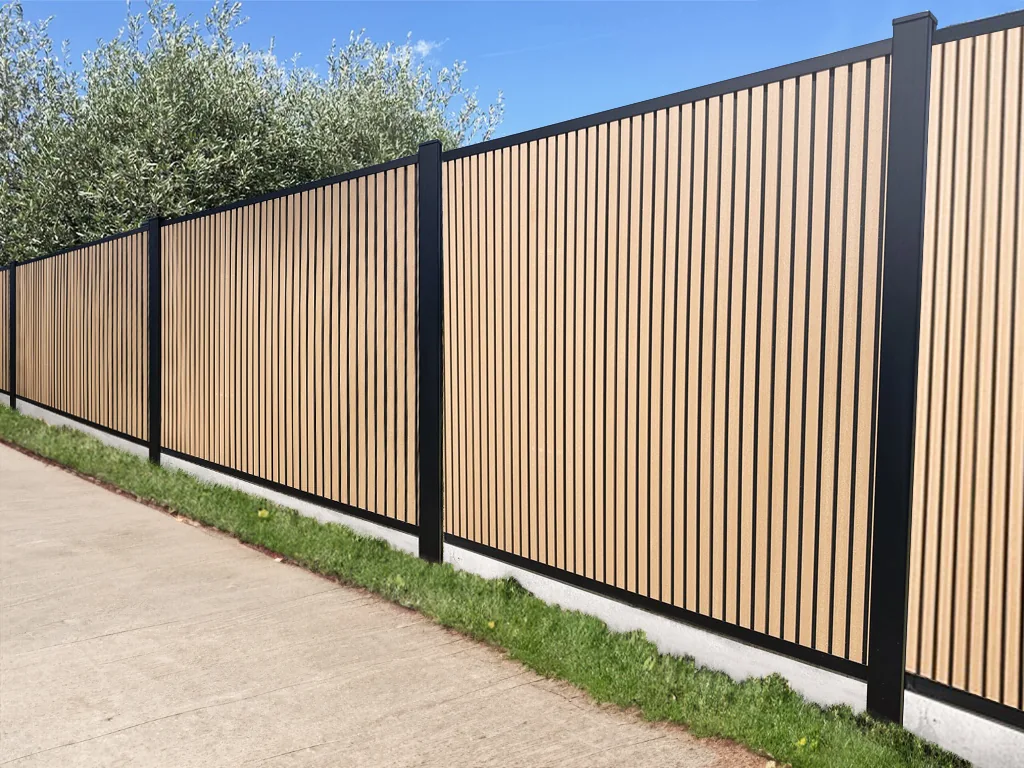
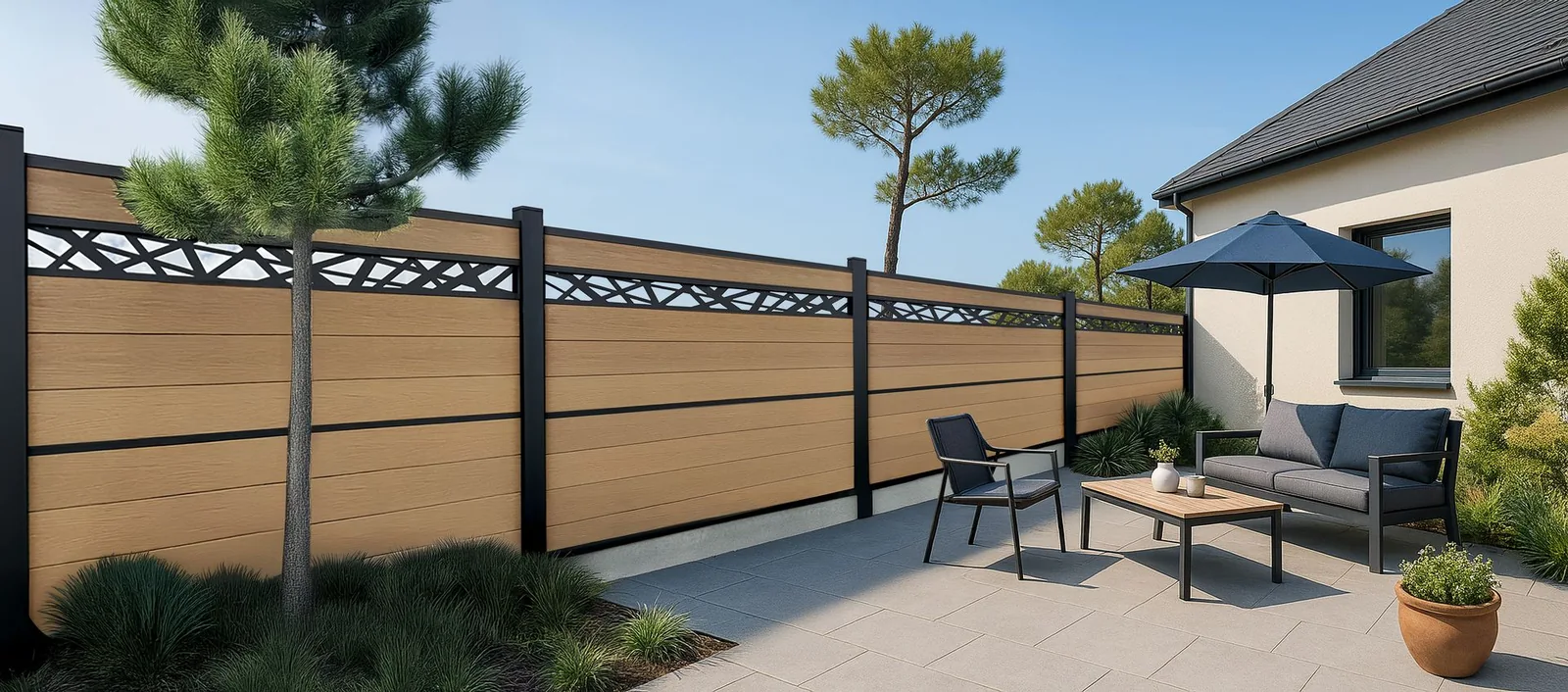
Modularity: total or semi-opaque options, horizontal or vertical slats, decorative panels, and aluminum inserts are possible.
-
Responsible Composition: a blend of wood fibers or flour and polymers, with increasing integration of recycled materials as options become available.
Field Observation: The client’s perception of quality depends on both the alignment of the slats and the spacing of the posts as much as on the material itself. A reliable slat profile, well fitted in its post and correctly shimmed, visually creates a level effect that wood finishes struggle to maintain after a few seasons.
Criteria for Choosing Professional Composite Fencing
-
Coextrusion and Surface: coextruded coatings stabilize appearance and color. A consistent grain reduces visible marking.
-
Dimensional Stability: prioritize systems that document expansion and prescribe clear tolerances.
-
Posts and Accessories: compatibility with aluminum posts, caps, corner reinforcements, and mounting plates increases wind resistance and installation efficiency.
-
Complete Ecosystem: matching gates, privacy solutions, finishes, and caps facilitate overall coherence and compliance with urban regulations (PLU).
-
Technical and Logistical Support: detailed installation instructions, measurement assistance, stock availability, and reliable timelines are crucial for multi-project companies.
-
After-Sales Service and Announced Guarantees: favor manufacturers and distributors that formalize conditions for implementation and maintenance.
Best Installation Practices and Points of Vigilance
-
Foundations and Anchoring: size the fixings or plates according to height, wind exposure, and soil type. A homogeneous reservation reduces visible alignment gaps over long spans.
-
Managing Expansion: allow gaps at the ends of the slats and at joints, respect installation direction, and avoid hard points.
-
Structure and Straightening: check the vertical alignment of posts at each module, shim the first levels using a fixed template, and verify alignment in projection to avoid a "wavy" effect.
-
Cuts and Finishes: use appropriate saw blades and always chamfer cuts to preserve surface condition.
-
Construction Site Environment: consider prevailing winds, vegetation masks, slopes, and thresholds; coordinate with buried utilities and respect setback regulations.
Practical Warning: on dark shades exposed to full sun, heating can accentuate daily dimensional variations. Properly calibrated gaps and compliance with the installation direction limit constraints.
Concrete Benefits for Professionals
-
Client Satisfaction and Project Valuation: consistent appearance over time, wood or mineral aesthetic without annual touch-ups.
-
Controlled Installation Time: systems designed for assembly mean fewer final adjustments and less rework.
-
Reduced After-Sales Service: fewer deformations and appearance alterations due to moisture or UV, if installation respects tolerances and anchoring requirements.
-
Commercial Coherence: modular range for addressing fencing, privacy solutions, and gates with a consistent aesthetic language.
In Practice
For a landscaper working alone on a sloped plot: prepare a shimming template and build in short spans. Mastering the first posts reduces adjustments along the entire line.
For a dealer managing multiple projects simultaneously: standardize kits by height and color, pool compatible aluminum posts and accessories. This secures stock and reduces shortages.
If the site is exposed to wind: favor shorter spans, enhance anchoring, and check the system’s maximum height recommendations. Wind resistance takes precedence over visual rhythm.
In urban areas with strict PLU: choose documented colors and finishes and attach the installation guide to the file. This speeds up administrative approval and limits late modifications.
In summary, for a professional aiming for low after-sales service: choose a coextruded composite system, standardize compatible aluminum posts, and strictly adhere to the required expansion gaps.
If your project involves longer-than-usual lengths: sequence the spans, plan for visible expansion joints, and check alignment every 3 to 4 modules.
For a project owner sensitive to maintenance: prioritize easy-to-clean surfaces and formalize a simple maintenance record provided to the end client.
Our Expertise
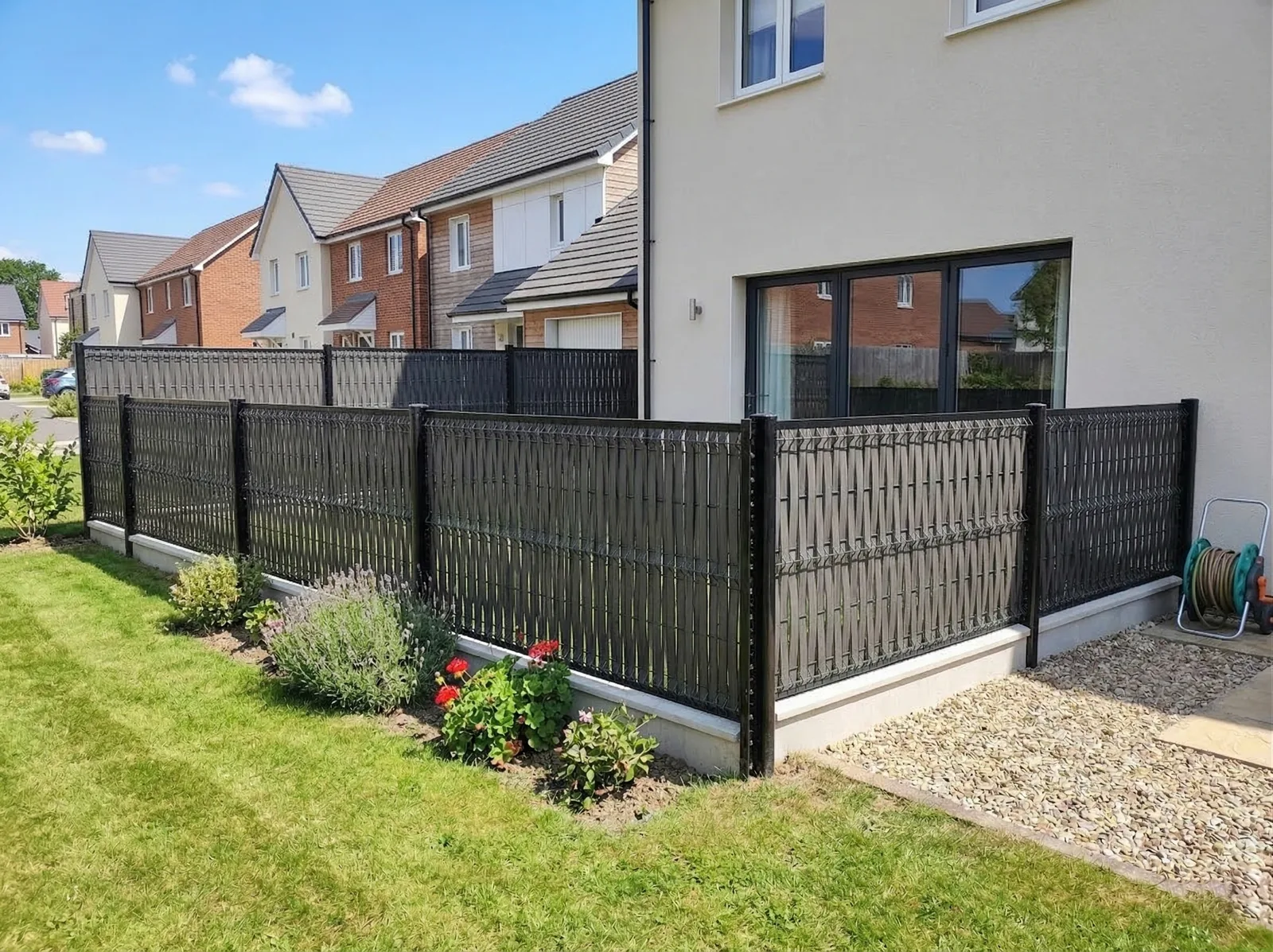
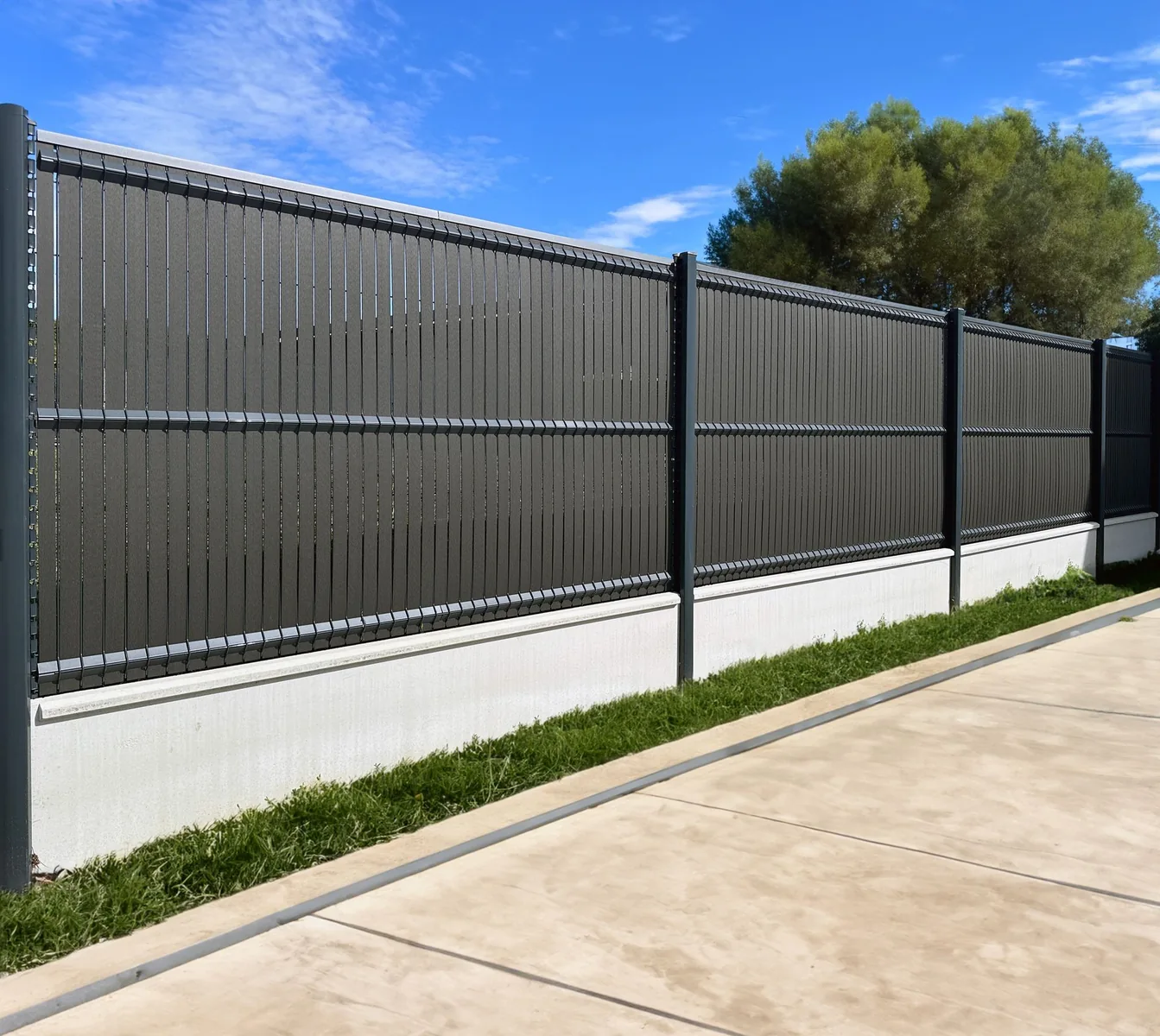
Paysapro officially distributes high-end solutions for the professional market: Redcinha® for coextruded composite fences with a wood-like aesthetic and minimal maintenance, Delclo® for fencing, posts, and composite & PVC slats for rigid and custom fences, as well as elipsun® for solar fencing. Our products are manufactured according to strict European standards, with UV tests and frost resistance requirements.
Synthetic Field Return: +50,000 linear meters supported in France and neighboring countries, over 5,000 monitored projects with installers, and over 15 years of B2B support. This volume has taught us that 80% of after-sales issues stem from installation gaps that are easily correctable upstream: expansion gaps, post verticality, and anchoring. By providing our partners with clear instructions, comprehensive kits, compatible aluminum posts, and professional samples, we help secure execution quality.
Do you want to offer a durable and aesthetic composite fencing solution to your clients? Contact a Paysapro advisor to explore our range dedicated to professionals and benefit from personalized support for your projects.
FAQ
How to manage the expansion of composite fencing in professional installation?
Provide gaps at the ends of the slats and never block the material between two hard points. Respect the prescribed mounting direction, check the vertical alignment of the posts at each span, and avoid over-constraints at corners. On dark shades and hot exposures, pay particular attention to joints and caps.
Composite, wood, or PVC: how to guide the final client’s choice?
Composite meets durability and minimal maintenance expectations with a stable appearance. Wood is suitable for projects accepting periodic maintenance and evolving patina. PVC offers a lightweight solution but is more sensitive to scratches and UV depending on quality. Check the PLU or homeowners' association regulations regarding allowed heights and shades, then balance between maintenance, aesthetic appearance, and overall budget.
What checks should be done before quoting and starting a project?
Check soil type and buried utilities, wind exposure, slope, and high/low points. Confirm the heights and colors permitted by the PLU or the homeowners' association regulations. On the technical side, decide on the anchoring method (fixing or plate), validate the expansion gaps, and plan cuts to avoid unproductive falls.
Would you like to know more?
Request a free sample or contact your regional manager for personalized support.